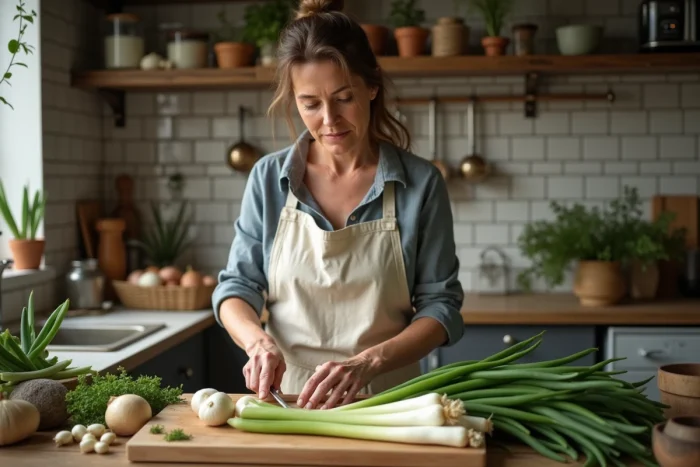
The French markets do not always ensure the availability of scallions, even in season. Strangely, some chefs swear by them, while others do not hesitate to replace them for reasons of texture or aroma. The name varies from region to region, causing confusion among enthusiasts and professionals.
The lack of scallions never blocks a recipe. Alternatives, often unknown or underestimated, offer results that can be surprisingly good, even superior depending on the dish.
Why look for a substitute for scallions in cooking?
Scallions are those slender stalks with a barely marked white bulb that bring a subtle sweetness and crunch to French cuisine and beyond. Yet, it’s not always easy to find them, even in good weather. With variable markets, short seasons, and the unpredictability of supply chains, scallions sometimes play hide and seek with both novice and seasoned cooks.
Giving up on a dish because of a missing scallion? Unnecessary. Soups, salads, tartares, and omelets deserve their green, sweet, fresh note. Other ingredients, sometimes close relatives, sometimes distant cousins, know how to rise to the challenge. Green onions, scallions, chives, spring onions, Spanish onions: each of them offers a slightly different variant, but always true to the spirit of the dish.
Looking for an alternative is not just about flavor. Rich in vitamins, minerals, and antioxidants, scallions also have nutritional benefits that we love to find on our plates. Ask bistro chefs or lovers of raw products: they all have their tips for maintaining the pleasure of fresh produce, even outside of peak season.
To navigate between the lack on the stall and the demands of taste, one piece of advice: consult the substitutes for scallions. The site “What to replace scallions with: alternatives and tips – Les Recettes Légères de Chrissy” offers a detailed overview. It provides concrete solutions for each recipe, with a real respect for textures and flavors.
Overview of the best alternatives according to your recipes
Scallions, with their sweetness and crunch, structure many dishes. Their absence is never a fatality: there are several substitutes that adapt to the constraints of each preparation. They are chosen according to the recipe, the expected intensity, and the desired texture.
Here’s a glimpse of the ingredients that play this role wonderfully:
- Green onion: this is the closest substitute. It replaces scallions without missing a beat, whether in salads, dressings, or sauces. Sliced into thin rounds, it brings freshness and balance.
- Scallion: with its elongated stalk and slightly stronger taste, it stands out in dishes that require character. As a garnish or for a finishing touch, it holds its own.
- Chive or spring onion: perfect for adding depth to omelets, gratins, or stews. Their slightly sweet softness is reminiscent of new onions.
- Chives: ideal for sauces, cold dishes, or dressings. They offer a vegetal freshness without excessive sharpness.
- Young garlic: for those who enjoy a hint of energy, especially in Mediterranean preparations. Its aroma remains subtle and does not overpower.
In other cases, a bit of finely chopped red onion or white onion can provide the desired note, especially if one seeks to enhance the sharpness or densify the texture. The trick is to cut very finely so that the aroma does not dominate the dish. By choosing carefully, one can find the typical aromatic signature of scallions without sacrificing the personality of the dish.

Delicious ideas to enhance your dishes without scallions
Going without scallions in recipes opens the door to creativity. For a vegetable soup, a handful of finely sliced scallion or chopped chive supports the vegetal note and adds that little crunch that makes a difference.
In an omelet or gratin, spring onion rounds take over, enhanced by a drizzle of olive oil and a pinch of pepper. Chives or young garlic, added as a finishing touch, flavor without overwhelming the other tastes. For stews, a sprinkle of chives just before serving infuses a welcome freshness into the sauce.
Asian cuisine often relies on green onions for their intense greenness, while Mediterranean cuisine favors the sweetness of chives or scallions, especially when paired with rosemary or a few coriander leaves. To finish a cold dish, mix fresh herbs and crushed spices: the diversity of textures and aromas brings character back to the recipe. Each substitution, well chosen and adapted to the season, becomes an opportunity to refine your plates, explore new balances, and, above all, never get bored in the kitchen.