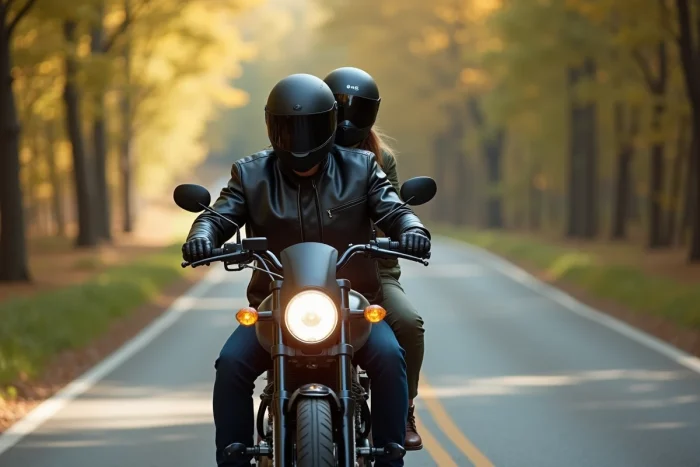
The Benda 125 actually refers to several models in the range of the Chinese manufacturer, and not all are suitable for carrying a passenger. The Benda Rock 125 is approved for two, while the Napoléon 125, with its single seat and short rear loop, is strictly reserved for the rider alone. This technical distinction affects everything else: suspensions, ergonomics, balance of the loaded motorcycle.
Rock 125 or Napoléon 125: which Benda for riding two-up
The confusion between the two models often comes up in forums and discussion groups. The Napoléon 125 attracts with its neo-retro bobber look, low floating seat, and chrome finishes. Its catalog price of 5,499 euros including VAT makes it appealing for a first purchase.
The problem is simple: the Napoléon 125 only accepts one occupant. Its solo configuration, with a very short rear loop, leaves no room for a passenger. No official accessory allows it to be converted into a two-seater.
The Rock 125, on the other hand, was designed from the outset to accommodate two people. As highlighted in a review by Motoservices, this V-Twin engine cruiser is “an eighth-liter cruiser that is appreciated this time for two.” Feedback from users who have traveled several hundred kilometers two-up confirms that the motorcycle lives up to its promises in this regard. For more information on Auto l’Hebdo, a comprehensive file details the differences between these two models.

Ergonomics and comfort of the Benda Rock 125 for two on the road
Riding two-up on a 125 imposes constraints that larger bikes absorb more easily. The weight of the passenger alters the center of gravity, puts more strain on the rear suspension, and increases braking distances. On a lightweight motorcycle, every design detail matters.
Seat and passenger position
The Rock 125 features a wider and longer seat than the Napoléon. The riding position remains classic, with handlebars that do not force the rider to lean excessively. The passenger benefits from a distinct seating area, separate from that of the rider, with dedicated footpegs.
The low seat height makes stops easier for the rider, even with a passenger who alters the weight distribution. This point reassures riders holding an A1 license or a B license with a seven-hour training, who are often less experienced.
Suspensions and road holding for two
The Rock 125 is equipped with a dual rear shock absorber. When riding two-up, these shock absorbers work harder than when solo, and it is often necessary to adjust the preload to compensate for the extra weight. A shock absorber that is too soft when two-up can cause an unpleasant pumping effect in curves and reduce ground clearance.
The overall behavior remains that of a cruiser: stable in a straight line, less agile in tight sequences. With a passenger, this stability becomes an asset rather than a drawback.
V-Twin 125 engine and power limits when riding two-up
The V-Twin engine of the Rock 125 is one of its selling points against competing single-cylinder models. On paper, a V-Twin offers a more generous low-end torque, which helps to accelerate the motorcycle out of corners or uphill, situations where the weight of the duo is felt.
A 125 engine two-up quickly reaches its limits on major roads. Overtaking requires more anticipation than when riding solo. Long climbs, especially on mountain roads, necessitate frequent downshifting to maintain a proper speed. The gearbox must be actively utilized.
Three points deserve attention before heading out for a ride two-up on a Rock 125:
- The realistic cruising speed is significantly below the theoretical maximum, especially against the wind or uphill. Plan routes on departmental roads rather than fast national roads.
- The ABS braking system, present on the Rock 125, partially compensates for the increased stopping distances due to the extra weight. This system remains a valuable safety net for a rider not accustomed to riding two-up.
- Fuel consumption increases significantly when riding two-up. With a modestly sized tank, fuel stops come closer together on long journeys.
Benda Rock 125 compared to Mash and Royal Enfield alternatives for two-up riding
The segment of neo-retro 125s compatible with two-up riding includes a few references. Mash models, often cited in comparisons, offer similar pricing with a similar aesthetic. Royal Enfield, although positioned in higher displacements, also has a 125 model (depending on the markets).
The Rock 125 stands out for its V-Twin engine, rare in this displacement category. Most competitors run with a single-cylinder engine. The V-Twin provides a deeper sound and a different riding pleasure, often perceived as more enjoyable for cruising.
The distribution network and warranty are criteria to check before purchasing. Benda is gradually developing its presence in France, but the network of dealers is less dense than that of brands that have been established longer. Access to spare parts and the responsiveness of after-sales service vary from one point of sale to another.
The bobber or cruiser style does not appeal to everyone, and the look should not overshadow mechanical criteria. The long-term reliability of the Benda 125 is still uncertain: the brand is new to the European market, and feedback over several tens of thousands of kilometers remains rare.
For regular two-up use on the road, the Benda Rock 125 fulfills its role within the physical limits of a 125 engine. It will not replace a mid-displacement motorcycle on long trips, but for rides on departmental roads and weekend outings for two, it offers a coherent compromise between price, style, and functionality.