
The bank card is not always accepted for paying the release of a vehicle from the impound lot, contrary to what the Highway Code stipulates. Some establishments still impose cash payments or limit the amounts, leading to complications for owners eager to retrieve their car.
Recently, online solutions have emerged that allow for part of the fees to be paid remotely, but their availability varies by municipality. These differences in practices create unequal situations, often leading to misunderstanding and frustration for users.
Understanding impoundment: why, how, and at what cost?
Finding oneself in an impound lot is unexpected: a troublesome, abusive, or deemed dangerous parking, and the penalty is imposed. In Paris, Lyon, Marseille, or elsewhere, the decision rests with the police or a competent authority. As soon as two wheels leave the ground, the process is triggered: the removal is confirmed. The owner then finds a descriptive sheet on-site drafted by a judicial police officer, detailing the condition of the vehicle and noting any potential damages.
The impound fees are strictly regulated by decree and published in the Official Journal. However, the rates vary by city and vehicle type. In Paris, one must pay €150 for the removal, then €29 for each day of storage. In Lyon, Marseille, or Toulouse, the removal is set at €127.65, with storage at €10 per day. In many other cities, the removal drops to €121.27 and the storage aligns at €6.42. Additionally, immobilization fees (€7.60) and preliminary operations (€15.20 for a private car) are added.
The bill can quickly add up if the vehicle remains behind the gates for several days. After fifteen days without a claim, the car is considered abandoned, transferred to the Domain service, and then sold or destroyed depending on its condition. The financial pressure associated with impoundment has led to the emergence of new options, including installment payments at the impound lot, an evolution detailed in the article ‘Discover the different payment methods accepted by impound lots – Speeder’. Given the diversity of local practices and the increase in rates since March 2024, each owner must inquire in advance about the process and costs of the removal.
What payment methods are accepted to retrieve your vehicle?
To drive away in a vehicle retrieved from the impound lot, all associated fees and any potential fines must be paid. This payment is made to the administration or the manager, traditionally on-site, sometimes online depending on the cities. Today, most impound lots in France allow payment through various means, presented below:
- Bank card: accepted almost everywhere, via a secure terminal. However, some impound lots impose a transaction limit; it’s better to check before going there.
- Cash: still accepted at many locations, within the legal limit of €1,000 for French tax residents.
- Bank check: tolerated in a few cities, only for individuals, provided a form of identification is presented. In Paris, this option is often excluded.
Paying in installments remains very rare, except in exceptional cases or specific local arrangements. In large cities, modernization is progressing: remote payment, contactless, dematerialized administrative procedures. To retrieve a vehicle, one must present an identification document, the registration certificate, and the insurance certificate. Be careful, if the procedure fails, no fees already paid will be refunded.
Car insurance, even with theft coverage, does not cover impound fees. The owner must therefore pay the full amount, whether immediately or under a local deferred arrangement. In some cities, an online service facilitates checking the amount due and, sometimes, allows for direct payment, thereby speeding up the return of the vehicle.
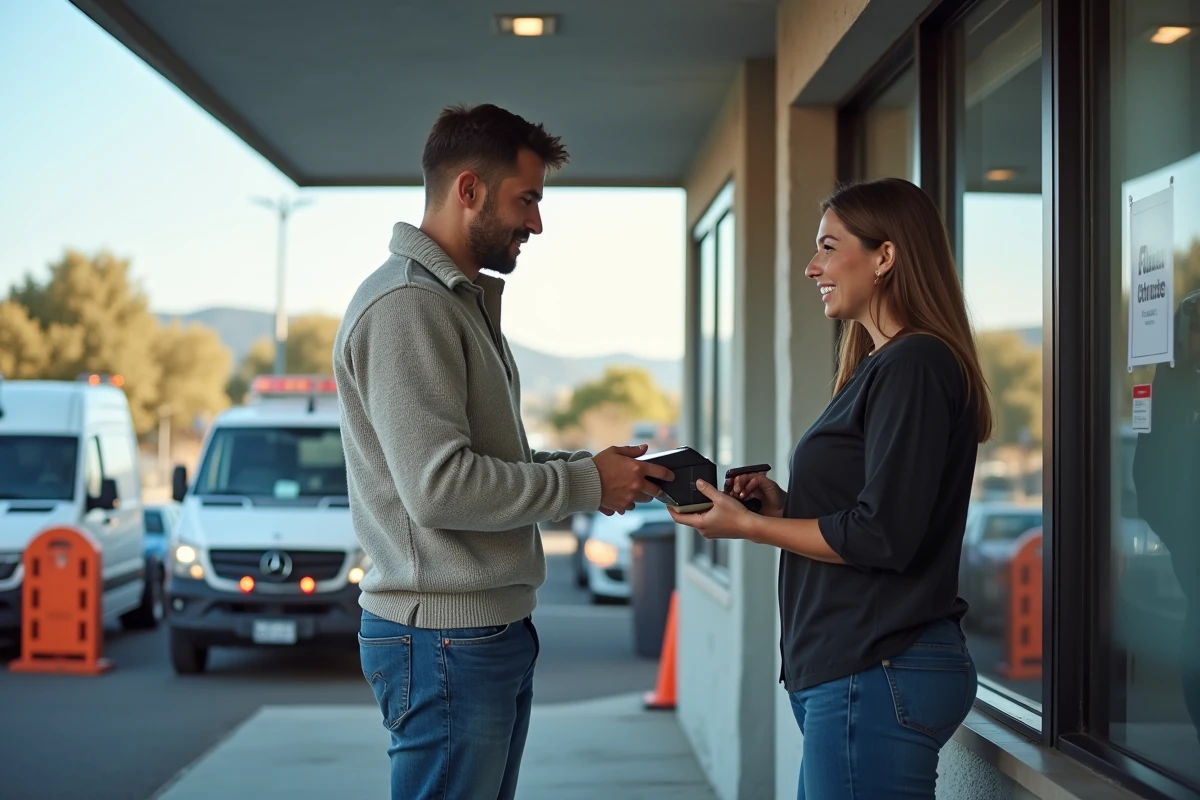
Online procedures: simpler, faster to pay and retrieve your car
The digitization of procedures transforms the experience for drivers confronted with impoundment. Thanks to the national tele-service, it is now possible to locate one’s vehicle, access the list of impound lots, and obtain a release decision without having to travel. This system, managed by the Ministry of the Interior, centralizes all useful information: precise address of the impound lot, opening hours, necessary steps to retrieve the car.
In Paris, the system goes further. A dedicated tele-service allows users to pinpoint the exact location of the vehicle and track the progress of the procedure step by step. The interface displays the details of the fees to be paid, calculated according to the vehicle category and the time spent in the impound lot: removal at €150, daily fees at €29, all in accordance with the decree published in the Official Journal. Transparency is total, every amount is explicitly displayed.
Payment is made online, by bank card, and through a secure protocol. Once validated, the restitution process accelerates: no more mandatory visits to the counter, waiting times are reduced, and uncertainty is alleviated. The simplicity of the online service lightens the administrative burden and ensures traceability of each step. On a national scale, this tele-service is evolving the experience for motorists, who have long faced opaque and discouraging procedures. We are finally moving towards greater clarity and efficiency, and, in many cases, avoiding some precious hours of stress.