The number of medical procedures performed at home has increased by 20% in five years, according to Drees. Regulatory requirements now impose detailed digital traceability for each patient followed outside of healthcare facilities. However, only 48% of independent healthcare professionals believe they have the appropriate tools to effectively manage their administrative and clinical tasks remotely.
The arrival of specialized digital solutions promises to transform daily management by automating care coordination, secure data transmission, and personalized patient follow-up. These tools profoundly change the relationship between professionals and patients while meeting the growing expectations for efficiency and quality at home.
Digital Technology: A Driving Force for Transformation for Healthcare Professionals
This wave of digital technology is sweeping through the healthcare sector and reshaping daily operations, far beyond mere announcements. E-health is not only saturating the space of medical conferences: it is asserting itself everywhere, in all practices, aided by solutions that orchestrate logistics like medical records. Every week, hours are saved, routines are lightened. Professionals are reclaiming time, that precious commodity.
Practice management, care coordination, and information security are accelerating thanks to frameworks such as those from the Agency for Digital Health or the High Authority of Health. Secure messaging systems branded by ANS lock in the confidentiality of exchanges. And the Shared Medical Record, integrated into suitable software, provides an accurate, reliable, continuous view of each care pathway.
The emergence of artificial intelligence is no longer a thing of the future: decision support, paperwork automation, ultra-fast data analysis. Yannick Neuder, spokesperson for the Ministry of Health, announced the rollout of an AI training program aimed at reaching 500,000 caregivers. This skills boost stems from a clear observation: to face the modernization of the healthcare system, the entire chain must rely on robust and concrete digital building blocks.
Now, choosing a relevant digital tool is part of the reflexes: appointment management, teleconsultations, online billing, agenda management—everything must be adaptable and evolve. For those looking for a solution focused on real practice, it is possible to discover PharmaHub for professionals. This field-oriented approach, validated in real-time in leading establishments like AP-HP, reminds us that digital is not reserved for sprawling hospital networks: it also injects its dynamics into independent practices where every minute saved from paperwork translates into time for the patient.
What Innovative Solutions Facilitate Care Follow-Up and Coordination?
Delivering coordinated care requires immediate, secure, and readable transfer of medical information. Digital tools create this link between caregivers, patients, and social-medical actors, facilitating responsiveness across the territory. The Shared Medical Record plays a pivotal role: enhanced data storage, access reserved for authorized professionals, and a complete history that streamlines exchanges and protects the patient.
Secure messaging systems, like MS Santé, set a new standard: rapid yet secure exchange, traceability of decisions. Interoperability, long awaited, is materializing with the Digital Ségur and the National Health Identity. This allows for flawless identification of each profile, each prescription, while ensuring the readability and efficiency of the information circuit. The latest medical software now combines practice management, electronic prescriptions, teletransmission, diagnostic assistance, DMP, and secure messaging: no more need to navigate between ten disconnected tools.
To illustrate these advances, here are some features currently favored in the field:
- Online appointment scheduling: simplifies planning, reduces absenteeism, and optimizes practice activity.
- Electronic billing: automates care management, limits errors, accelerates patient reimbursements.
- My Health Space: provides patients with direct access to their reports and allows for continuous dialogue with the care team.
AI further refines the approach, particularly regarding diagnostic precision or data analysis. Ultimately, healthcare professionals delegate the superfluous to algorithms and regain control over what truly matters: the relationship, listening, and personalized adjustment of the patient pathway.
Improving Well-Being at Home: The Impact of Technology on the Quality of Life of Patients and Caregivers
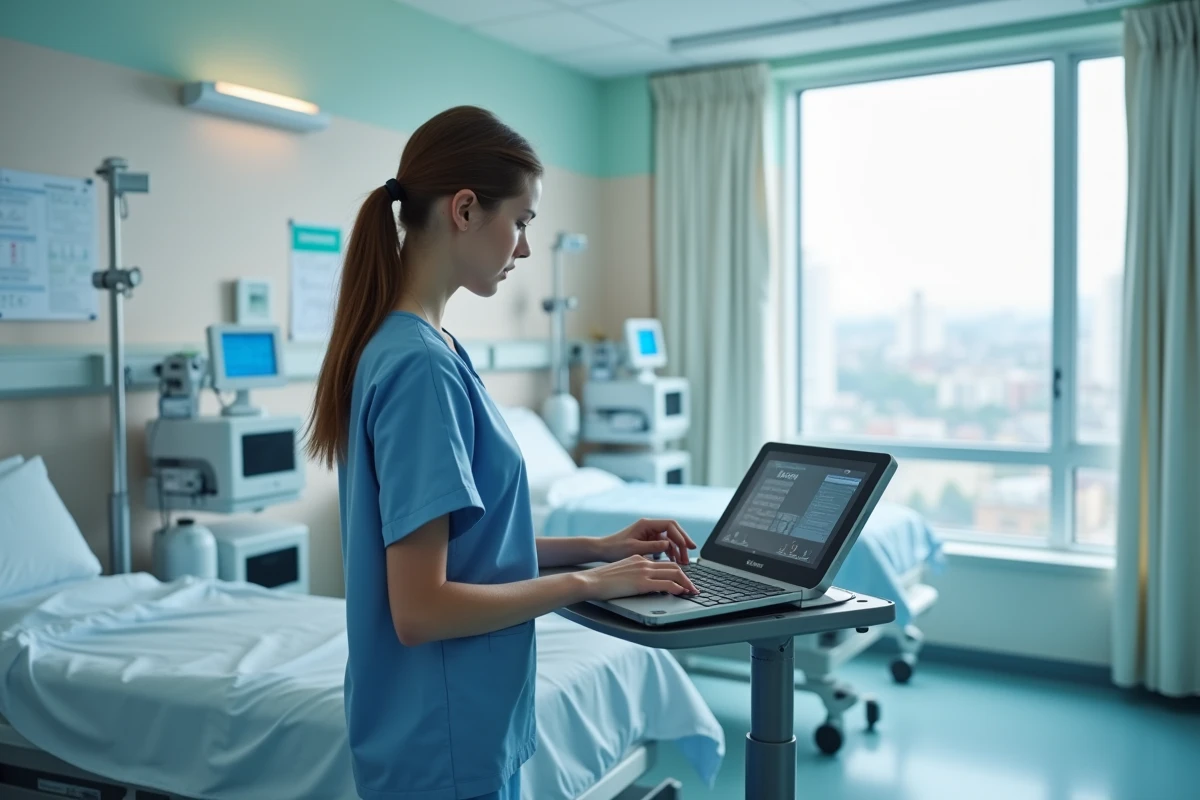
The arrival of digital technology in the home reshapes every step of the care pathway. Between connected objects, telemonitoring solutions, and simplified exchange platforms: the transformation is noticeable for both caregivers and patients. Professionals gain visibility on critical situations, limit unnecessary rounds, and instantly adapt their organization. Remote monitoring anticipates complications, allows for refined care management, and ensures that visits occur at the best time.
The rise of chronic conditions puts quality of life at work (QVT/QVCT) in the spotlight. The elimination of repetitive tasks reduces mental fatigue. Personalized alerts, centralized access to information, and streamlined exchanges improve the network between caregivers and families, who are invested in the care process. The result: increased autonomy for the patient, peace of mind for loved ones, and regained ability to personalize care. The upskilling, supported by suitable digital tools, continuously fuels this virtuous circle.
Here are some examples of the levers used daily:
- Mobile applications facilitating secure exchange between patients, nurses, and doctors: everything moves faster, without loss of information.
- Telemonitoring, which cares for patients remotely without burdening the lives of vulnerable individuals.
- The integration of devices to prevent psychosocial risks, thanks to immediate feedback and easy identification of situations to monitor.
In summary: the work environment calms, home care gains agility, and human presence retains its significance. Technology, far from erasing contact, enhances it where even the smallest gesture becomes meaningful. Tomorrow, the boundary between innovation and support tightens a little more, for care where humans and technology finally move forward side by side.